

Freedom Camping in New Zealand: How Free Is It Really?
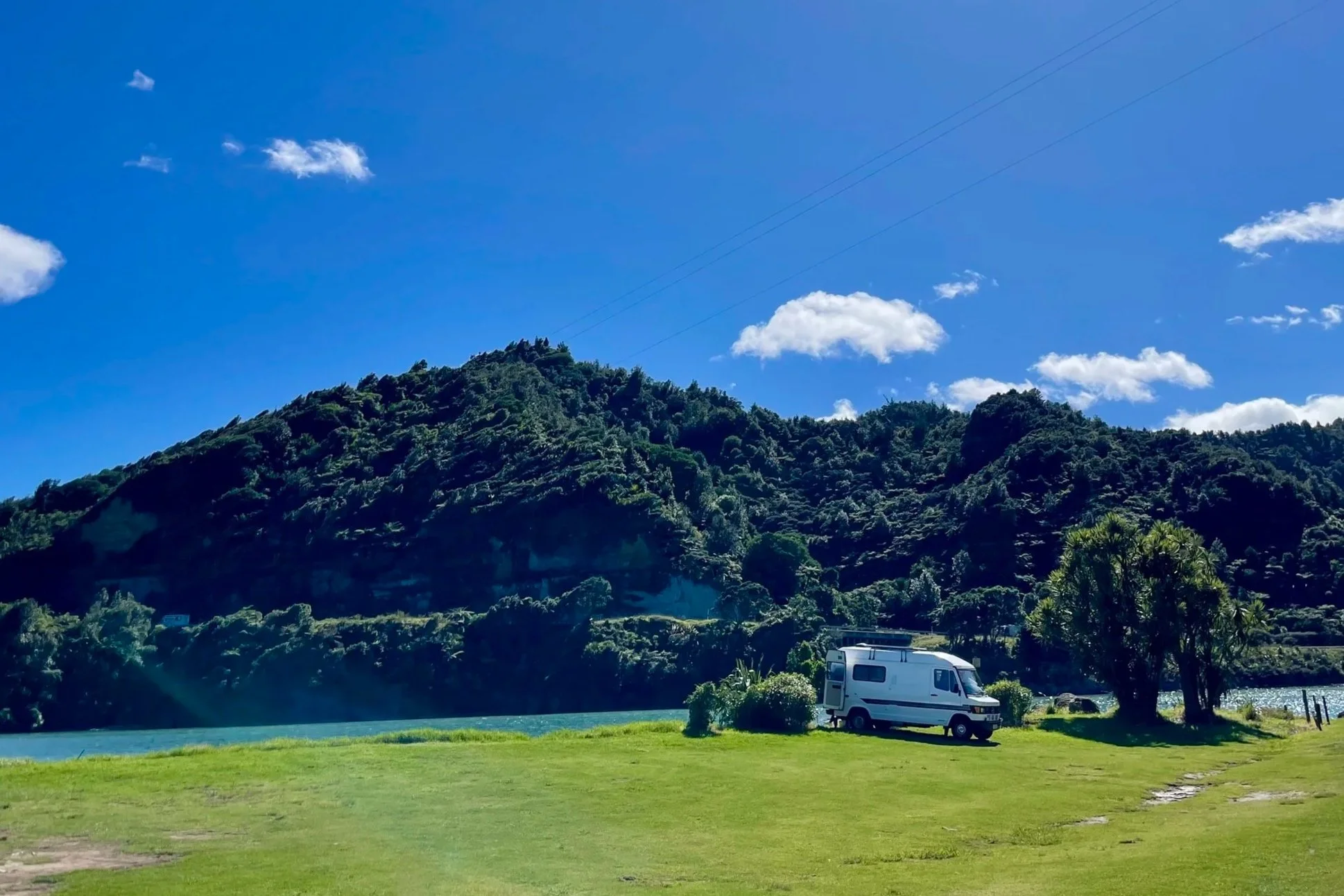
Our retro Mercedes camper van Puku, at the Three Sisters Freedom Camping Site, North Island.
Picture this: you wake up to a lake so still it looks like someone ironed it flat. No check-out time. No neighbouring tent pegged two metres from your face. Just you, your campervan, and a view that would cost $800 a night at a lodge. This is freedom camping at its best — and in New Zealand, it genuinely exists. In abundance.
But "freedom" is a word that benefits from a little fine print.
New Zealand has spent the last few years overhauling its freedom camping laws, tightening up the rules in response to some well-documented environmental damage caused by ill-equipped campers in years past. The result is a system that's actually better than what came before — cleaner, more sustainable, and ultimately more enjoyable — but one that requires you to turn up prepared. Here's everything you need to know.
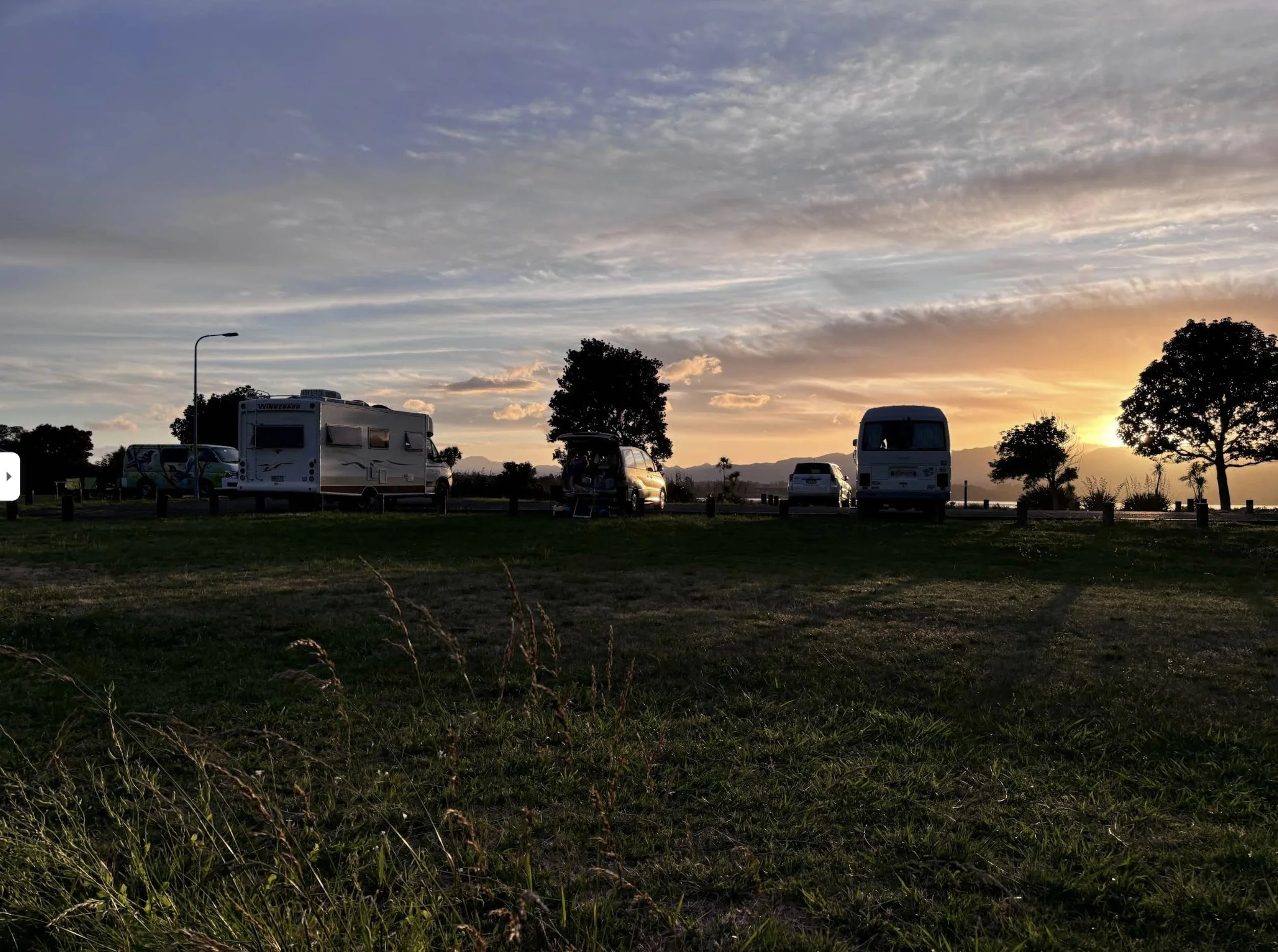
Camping at Tuapiro Freedom Camping Site, North Island.
What Exactly Is Freedom Camping?
Freedom camping is defined in New Zealand law as overnight camping on public land outside a designated campground or holiday park. That covers everything from a grassy DOC (Department of Conservation) reserve overlooking Fiordland to a quiet roadside pull-off in Northland with a pohutukawa tree for shade.
The key word in that definition is public. Freedom camping is not the same as pulling into someone's paddock, a private beach, or a car park that's technically closed after hours. Public land means land administered by the Crown, DOC, or your local council — and the rules for each can differ.
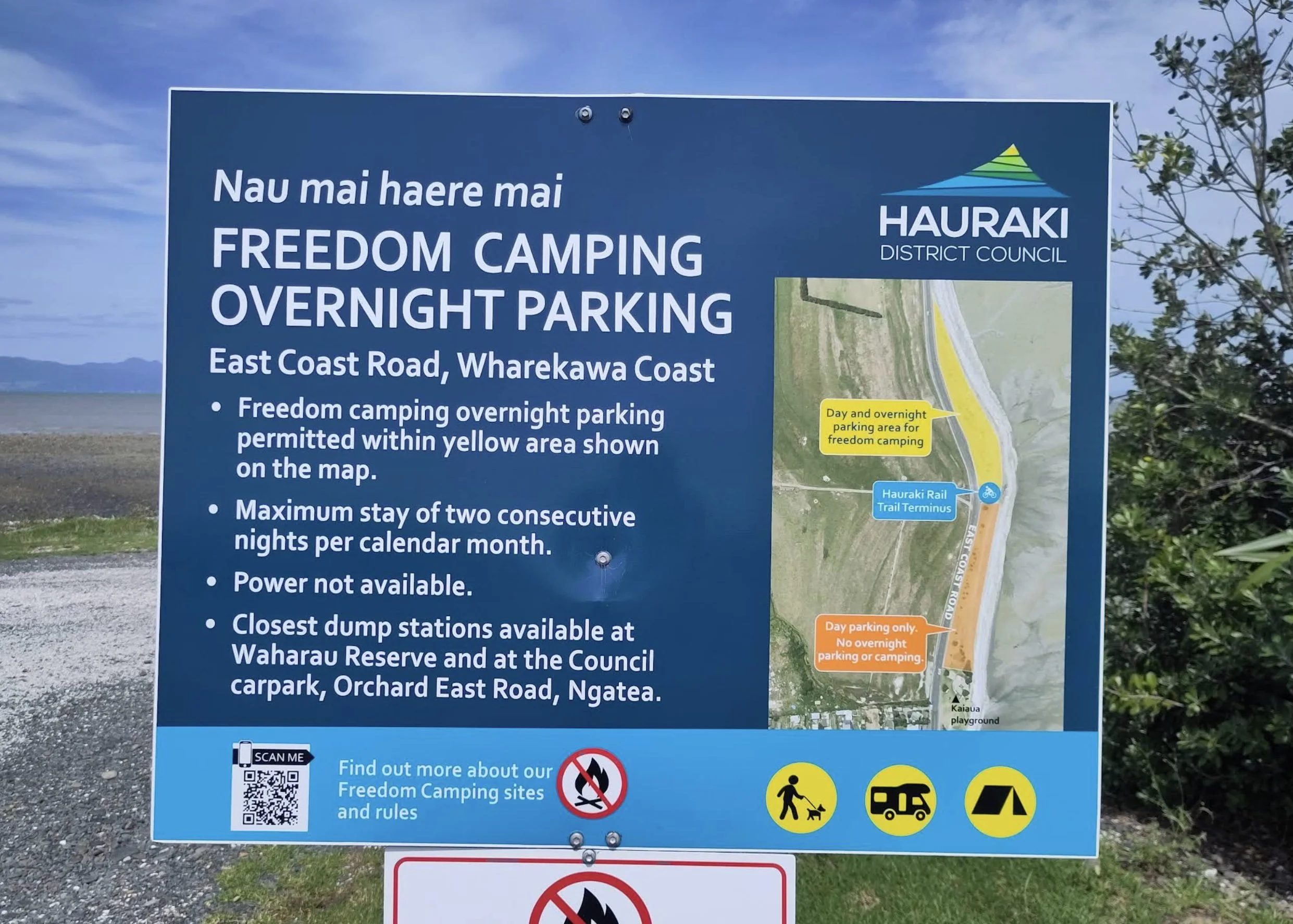
Freedom Camping sign, East Coast Road, Wharekawa Coast.
The New Rules: What Changed and Why
The big shift in New Zealand's freedom camping landscape has been the move to the Green Warrant self-containment certification system. Since December 2024, all rental campervans must hold a Green Warrant to be certified self-contained. Private vehicles have until 7 June 2026 to make the transition from the old Blue Warrant system.
This matters because freedom camping in most areas is only legal for certified self-contained vehicles. The new certification is more rigorous than the old one — and that's a good thing.
To earn a Green Warrant, a campervan must have:
A fixed, plumbed-in toilet connected to a sealed black water holding tank (portable cassette toilets no longer qualify)
A black water tank with a minimum capacity of 3 litres per person
A fresh water tank holding at least 4 litres per person per day for a minimum of three days
A sealed grey water tank of at least 12 litres per person
A fitted sink with a smell trap connected to the grey water system
An evacuation hose at least 3 metres long for emptying waste at designated dump stations
In short: if your vehicle can contain all of its waste for three days without discharging anything into the environment, it qualifies. If it can't, it doesn't — regardless of how beautiful the spot looks on Instagram.
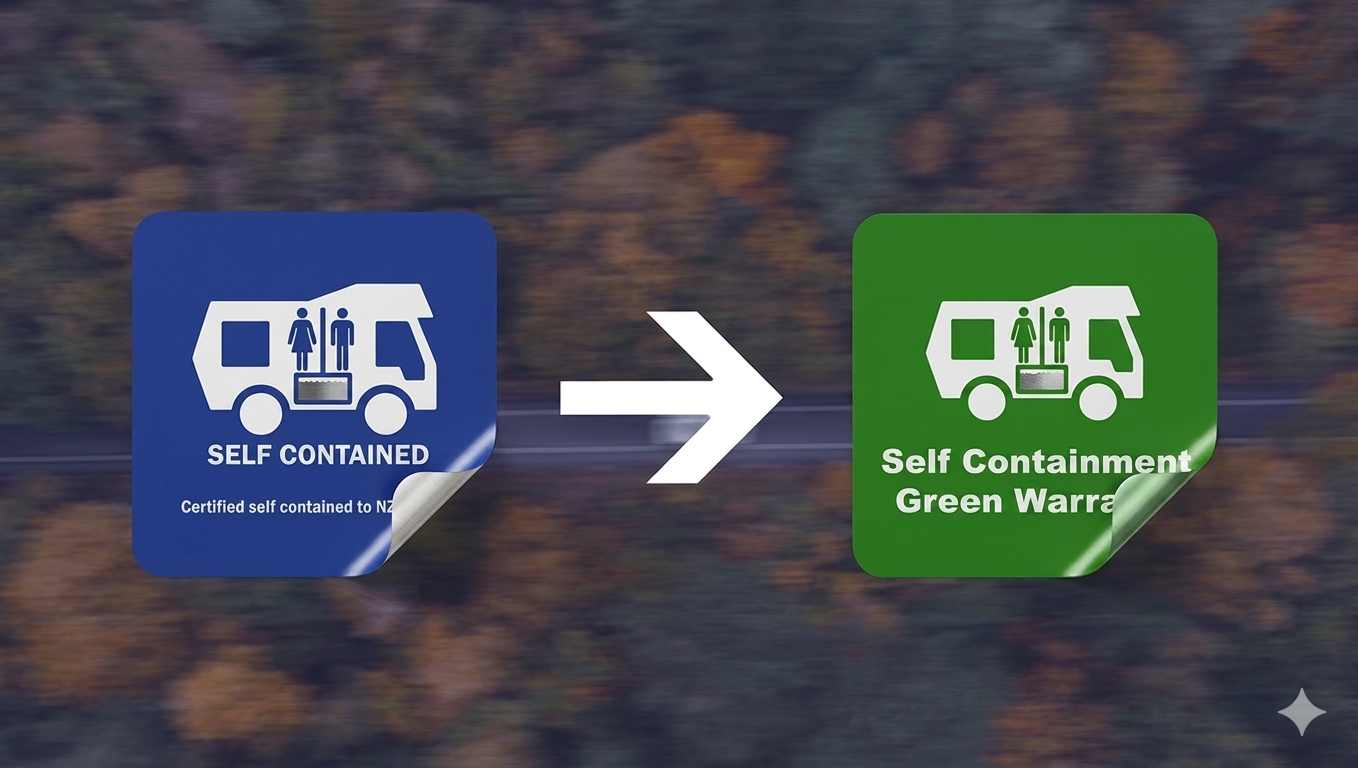
The old Blue Sticker and new Green Sticker for self-contained vehicles.
The Honest Reality: "Freedom" Comes with Boundaries
Let's be real. Freedom camping in New Zealand is not a free-for-all. Here's what the reality looks like on the ground:
You can't just stop anywhere. Even in a fully certified self-contained campervan, you're limited to areas where freedom camping is explicitly permitted or not prohibited. Individual councils set their own bylaws, and these vary enormously from region to region. Some councils are generous; others have banned freedom camping in entire districts.
Stay limits apply. Most freedom camping areas have a one- or two-night maximum. You're not meant to set up a semi-permanent camp — the idea is to move, explore, and leave no trace.
Some of the best spots are off limits. Popular areas near tourist hotspots — think Queenstown's lakefront, Bay of Islands beach reserves, and parts of the Coromandel — have restrictions or outright bans in high season. The places that look the most obvious on a map are often the most regulated.
Fines are real and they've gone up. Infringement fees now start at $400 and can reach $800 for violations like camping without self-containment certification or ignoring local bylaws. In serious cases — camping in prohibited areas or causing environmental damage — fines can reach $2,400. Councils do enforce these rules, particularly during summer.
Apps help, but aren't infallible. Resources like the CamperMate app, the Rankers Camping NZ app, and the DOC website are your best friends. They show permitted sites and current restrictions. Still, bylaws change seasonally, and an app that was accurate in January may be out of date by March. When in doubt, check the relevant council's website directly.

Queenstown Council freedom camping restrictions sign.
The Rewards: Why It's Absolutely Worth It
Here's the thing: understood properly, freedom camping in New Zealand is one of the great travel experiences on earth. The rules don't diminish it — they protect the very thing that makes it extraordinary.
The scenery is world-class. New Zealand packs more dramatic landscape per square kilometre than almost anywhere else on the planet. Fiordland, the Mackenzie Basin, the Marlborough Sounds, Northland's coast, the thermal plateau of the central North Island — these are places where freedom camping puts you in the landscape, not just adjacent to it.
You find spots that simply don't exist in the guidebooks. The freedom camping community is generous with knowledge. Ask at a campsite, scroll the forums, talk to locals. Some of the best spots are known only to people who've put in the mileage — a river bend in Canterbury, a hilltop clearing in Hawke's Bay with a 360-degree view, a coastal reserve on the Catlins Coast where you might see a sea lion from your door.
It genuinely saves money. Even a couple of nights of freedom camping per week can make a significant dent in your accommodation costs across a longer trip — freeing up budget for experiences, local food, and the odd thermal pool.
The mornings alone are worth it. There is no alarm clock, no traffic, no neighbour's kid crying at 6am. There is birdsong — possibly a tūī, possibly a kererū landing heavily on a branch nearby. There is coffee in a mug in a doorway. There is light on a ridge that no one else is watching. This is what freedom camping delivers, and it delivers it reliably.
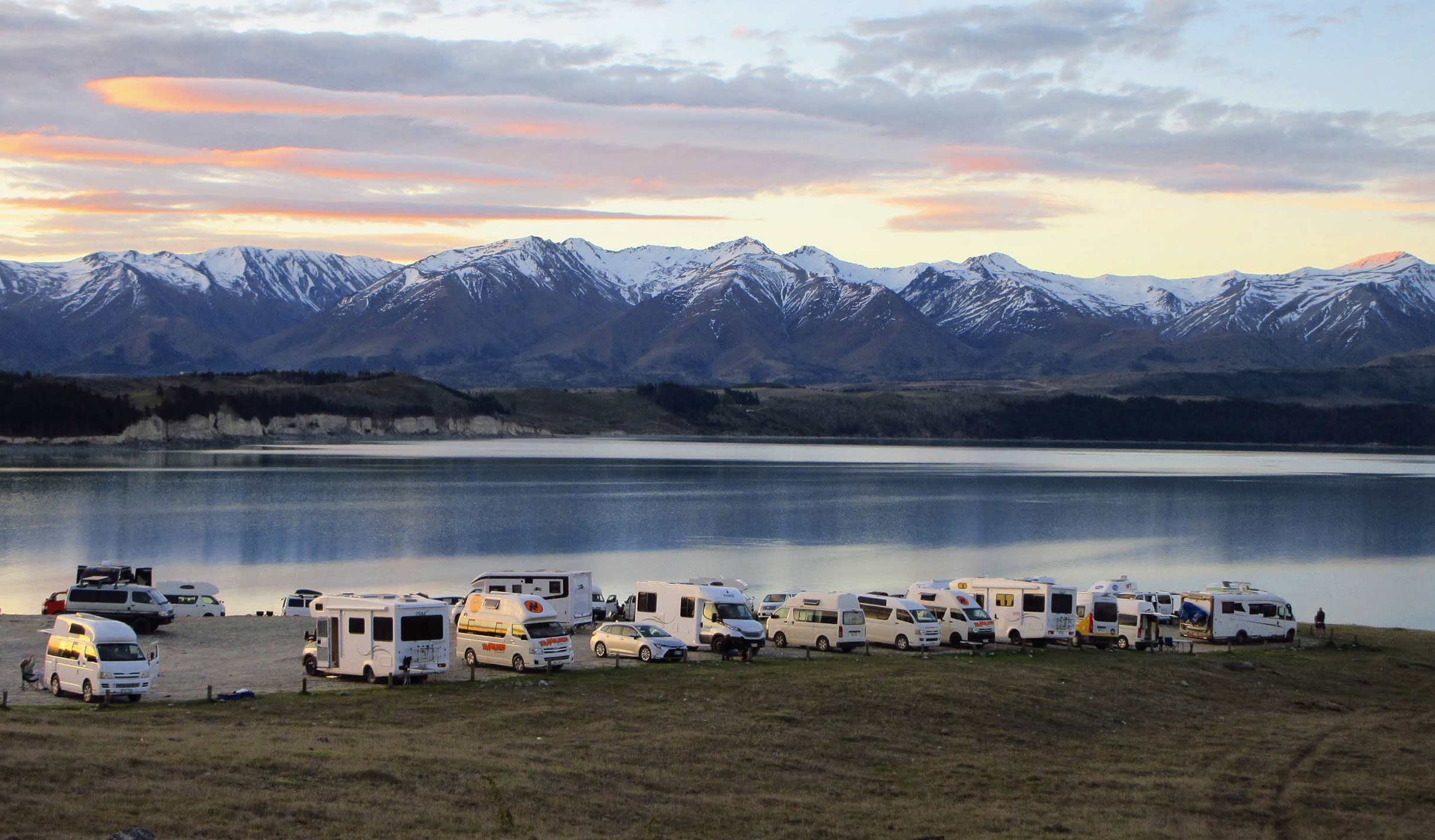
Lake Pukaki Overnight Camper van Parking, South Island.
The Smarter Way to Do It: Hire a Certified Self-Contained Campervan
The simplest way to take the complexity out of freedom camping is to hire a vehicle that's already fully certified — so you're never left guessing. A quality rental campervan will carry the current Green Warrant certification, meaning you have access to the full range of freedom camping sites without any compliance concerns.
It also means you arrive prepared. A certified self-contained campervan has the water storage, waste management systems, and onboard facilities to be genuinely self-sufficient. You're not improvising; you're equipped.
When hiring, always confirm:
That the vehicle holds a current Green Warrant (not just described as "self-contained")
The location of dump stations along your intended route (apps like CamperMate show these)
Any specific regional bylaws for the areas you plan to visit
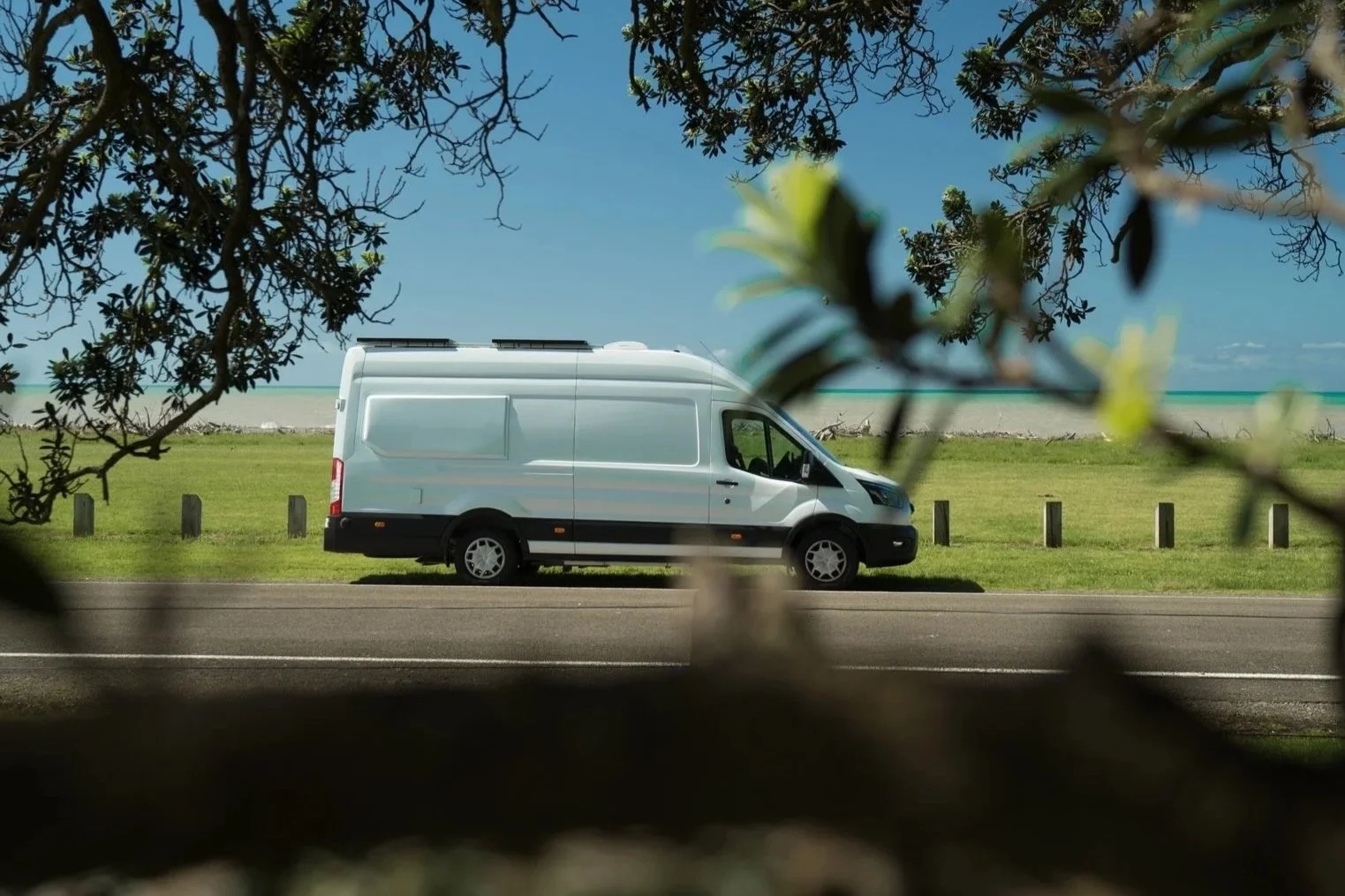
Our top of the line self contained luxury camper van, Kaewa, available to hire now!
Where to Start
A few genuinely excellent freedom camping areas to put on the list:
The South Island's West Coast is one of the most under-crowded stretches of New Zealand, with DOC reserves and council sites that put you right on the edge of the Tasman. The road from Westport to Haast is freedom camping gold.
The Mackenzie Basin (Central Otago) offers clear dark skies, glacial lakes the colour of a swimming pool, and a sense of space that feels genuinely cinematic. Lake Tekapo and the Aoraki/Mount Cook area have permitted sites nearby.
Northland rewards those who push past the Bay of Islands crowds. The Kaipara Harbour area and Far North have coastal reserves that are quiet even in summer.
Hawke's Bay and Wairarapa are accessible and underrated, with council sites among vineyards and along river valleys.
The Catlins in Southland is for the committed explorer — remote, wild, and genuinely unforgettable.
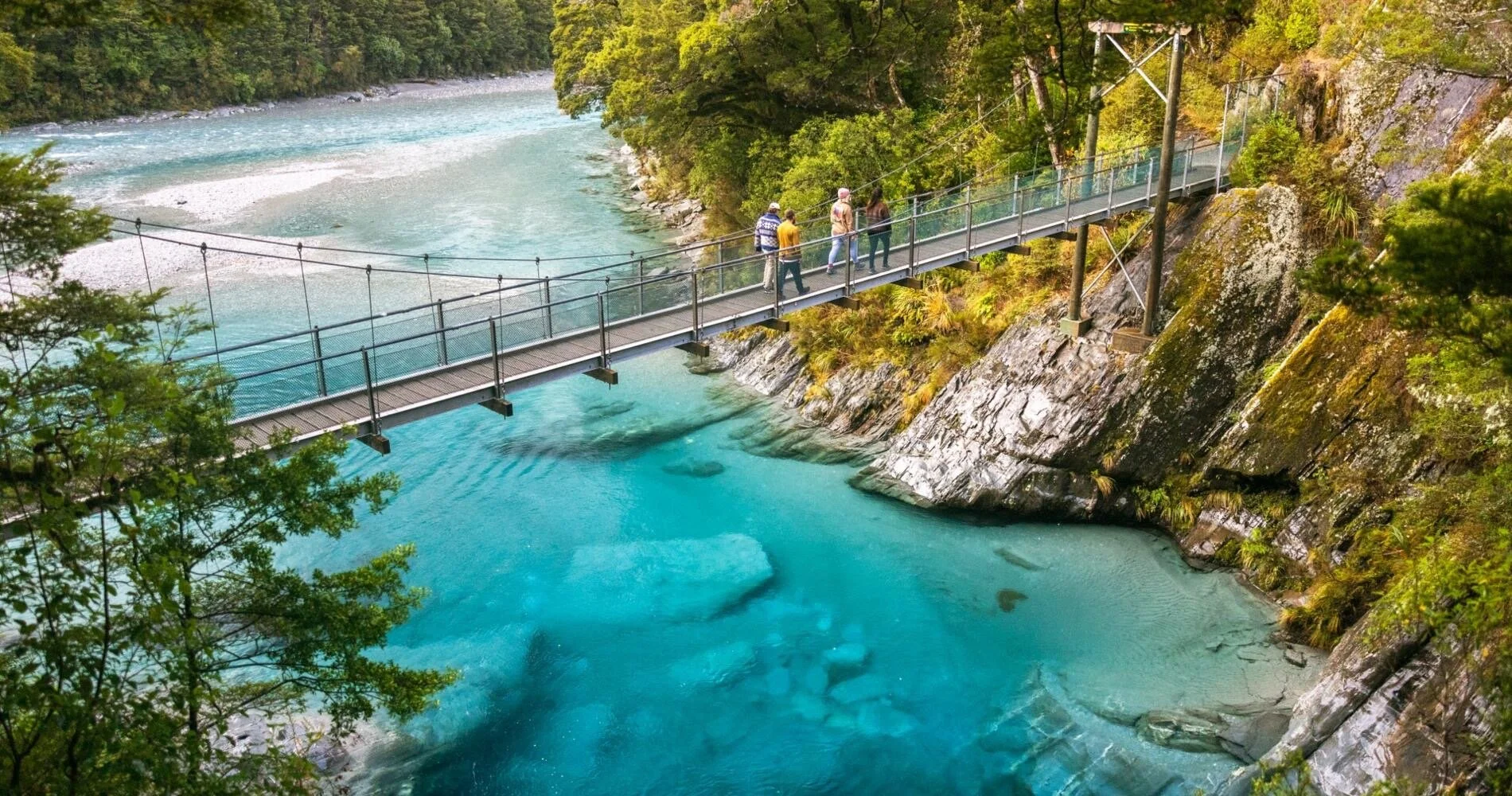
Haast, South Island, West Coast
The Bottom Line
Freedom camping in New Zealand is not entirely free — it's governed by sensible rules designed to protect the landscapes that make it worth doing in the first place. Understand the system, hire a properly certified vehicle, use the apps, respect the stay limits, and leave the site better than you found it.
Do all of that, and what you get in return is something rare: the feeling of waking up somewhere spectacular with nowhere you have to be.
That's freedom. It just needs a Green Warrant sticker.
Ready to explore Aotearoa on your own terms? Our luxury certified self-contained campervans are Green Warrant compliant and ready to go.
